Summer links: A new era in royal residence tourism?
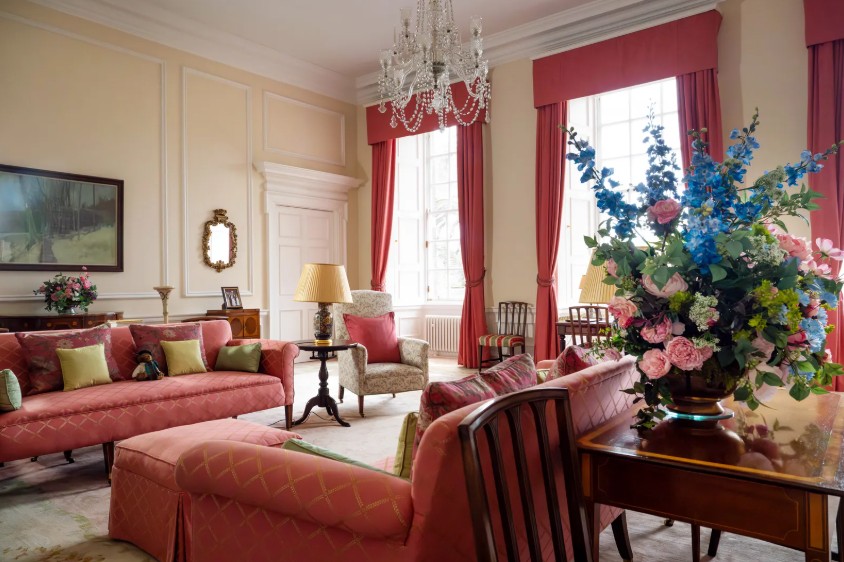
The Queen’s Sitting Room at Holyroodhouse. Helen Pugh/Royal Collection Enterprises Limited 2026/Royal Collection Trust
Summer and tourism season are officially here, and Home Subjects notes that since King Charles III was crowned in May 2023, he has taken steps to make the grounds and interiors of various royal palaces more accessible to the general public. Over the last decade we have explored royal interiors from a number of perspectives. Morna O’Neill wrote about the decoration of the sitting room at Balmoral Palace, for example, and both Morna and Anne have written on multiple occasions about the influence of royal Christmas decorating traditions on the tastes and habits of the public.
Of course, the practice of country house tourism is long-established in Britain and continues to be a thriving sector of the UK’s tourist industry. In addition to the networks of properties maintained for the public by organizations like the National Trust and English Heritage, there are many other privately-owned residences that are open to the public for tours and as special event venues. Others have been transformed into luxury hotels.
However, the palaces most closely associated with the private, daily lives of the royal family have been much less accessible to visitors. As I wrote in 2022, Queen Elizabeth II’s reign coincided with a number of other cultural developments that unsettled longstanding norms governing access to the royal family. They experimented with the use of television and candid photography to promote the appearance of increased intimacy with the general public, while spending much of their time in residences that were rarely, if ever, penetrated by regular people or tourists. Windsor, in keeping with centuries-long tradition, remained open for tours, but the two main residences of the royal family, Buckingham Palace in London and Sandringham House in Norfolk were closed. The visibility of Buckingham Palace through its gates leading onto The Mall gave the impression of transparency and accessibility; in fact access to the palace was closely guarded and secrecy paramount amongst current and former staff. I recommend readers check out a recent ‘classic’ episode of podcast Search Engine that explores rumors of a swimming pool at Buckingham Palace that has never been photographed, even by authorized photographers with full access to the palace and its grounds. The show’s hosts interview a wide range of sources in a quest to find some documentary evidence of the pool’s existence, their level of curiosity in inverse relationship to the atmosphere of secrecy that seems to permeate all aspects of royal life deemed ‘private’ or ‘intimate’.
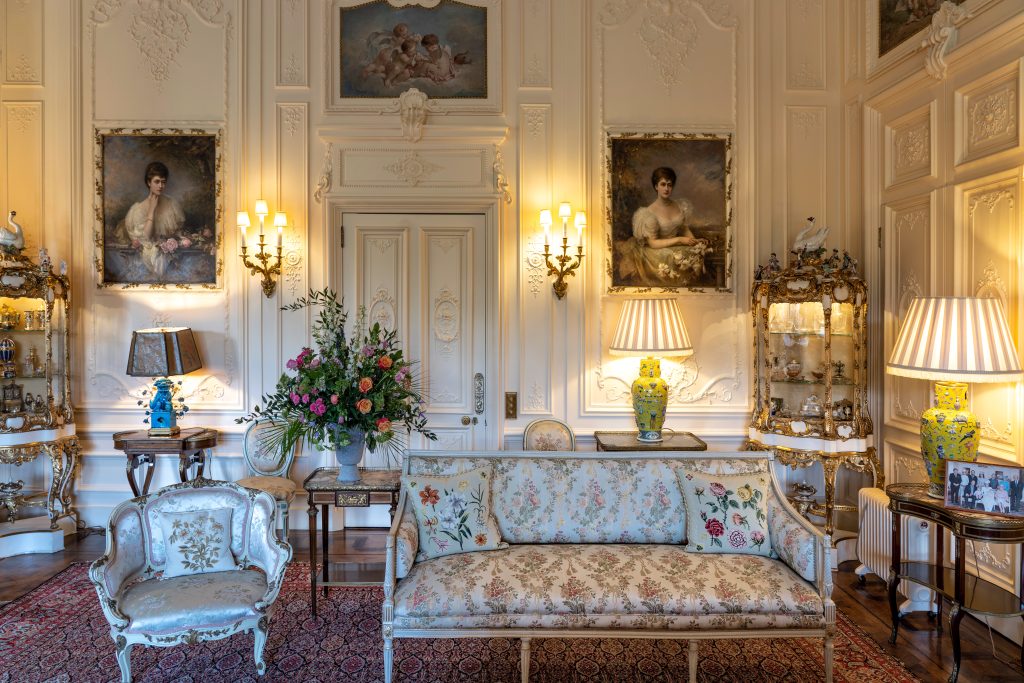
Interior view of Sandringham House © 2026 The Sandringham Estate
Following the fire that caused extensive structural damage at Windsor, however, a public debate around the cost of restoration–and responsibility for footing the bill–led to Buckingham Palace being opened for summer tours of the state rooms in 1993, in exchange for a then-substantial entry fee of $12.50 (for summer 2026, a single adult entry ticket to Buckingham Palace is approximately $44). For the most part, access remained limited throughout the remainder of Elizabeth II’s very long life. An exception was the gardens at Sandringham, which were opened in 1977 to coincide with the Silver Jubilee (2026 price of a ‘signature’ tour is approximately $200, which includes a gin & tonic using estate-grown botanicals, though prices start closer to $35).
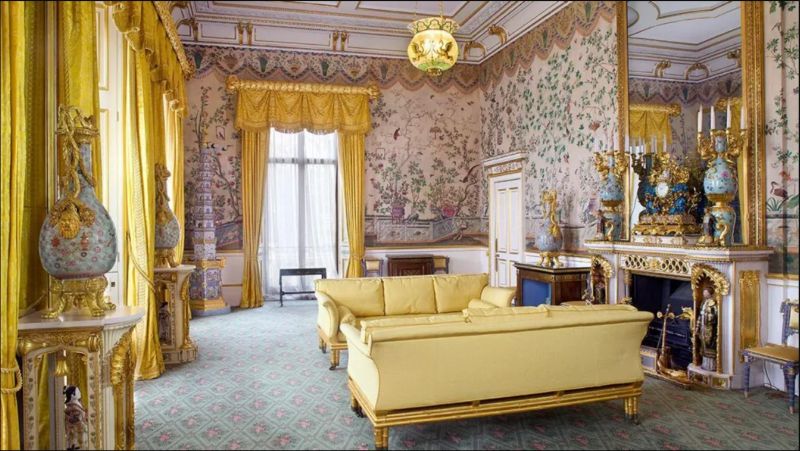
The Yellow Drawing Room in the East Wing at Buckingham Palace. Royal Collection Trust / © His Majesty King Charles III 2024, photo by Peter Smith
Not long after his coronation in 2023, however, King Charles made news by announcing that two previously-inaccessible private spaces would be opening to the public during the summer, the East Wing of Buckingham Palace, and Balmoral Castle in Scotland. These ventures have proved enormously successful thanks to the appetite of many to spend significant sums to gain access (2026 tickets for small-group tours of Balmoral cost nearly $150 and sold out almost immediately), and are of a piece with other initiatives that suggest Charles is renewing earlier attempts to ‘modernize’ the monarchy. (These efforts at increased transparency around the royal family and their residences are coming in the context of the arrest of Charles’ youngest sibling in association with criminal charges that have rightly shocked the public. These recent events have amplified–despite being of a different nature and kind–the cycles of negative publicity that have dogged the royal family for decades since Charles’ first marriage and subsequent divorce from Diana, Princess of Wales in the 1980s and 1990s.)
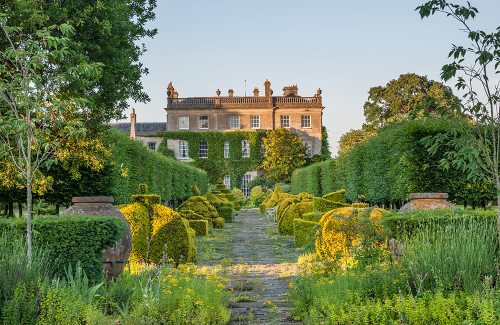
Thyme walk at Highgrove, designed by Sir Roy Strong. Image © His Majesty King Charles III Highgrove/The King’s Foundation
This year, Charles expanded the program by opening the private rooms used by his late mother at the Palace of Holyroodhouse in Edinburgh. Finally, Charles’ personal longtime residence, Highgrove, has recently become the focus of The King’s Foundation, whose work centers on supporting sustainability in farming, architecture, and design. Rumors have circulated for some time that Charles is considering leaving Buckingham Palace as a residence completely in favor of turning it into a museum. If such a plan were ever put into action, it would be another important episode in the centuries-long evolution of the relationship between royal dwellings and the public, and we will watch with curiosity to see what happens next.